




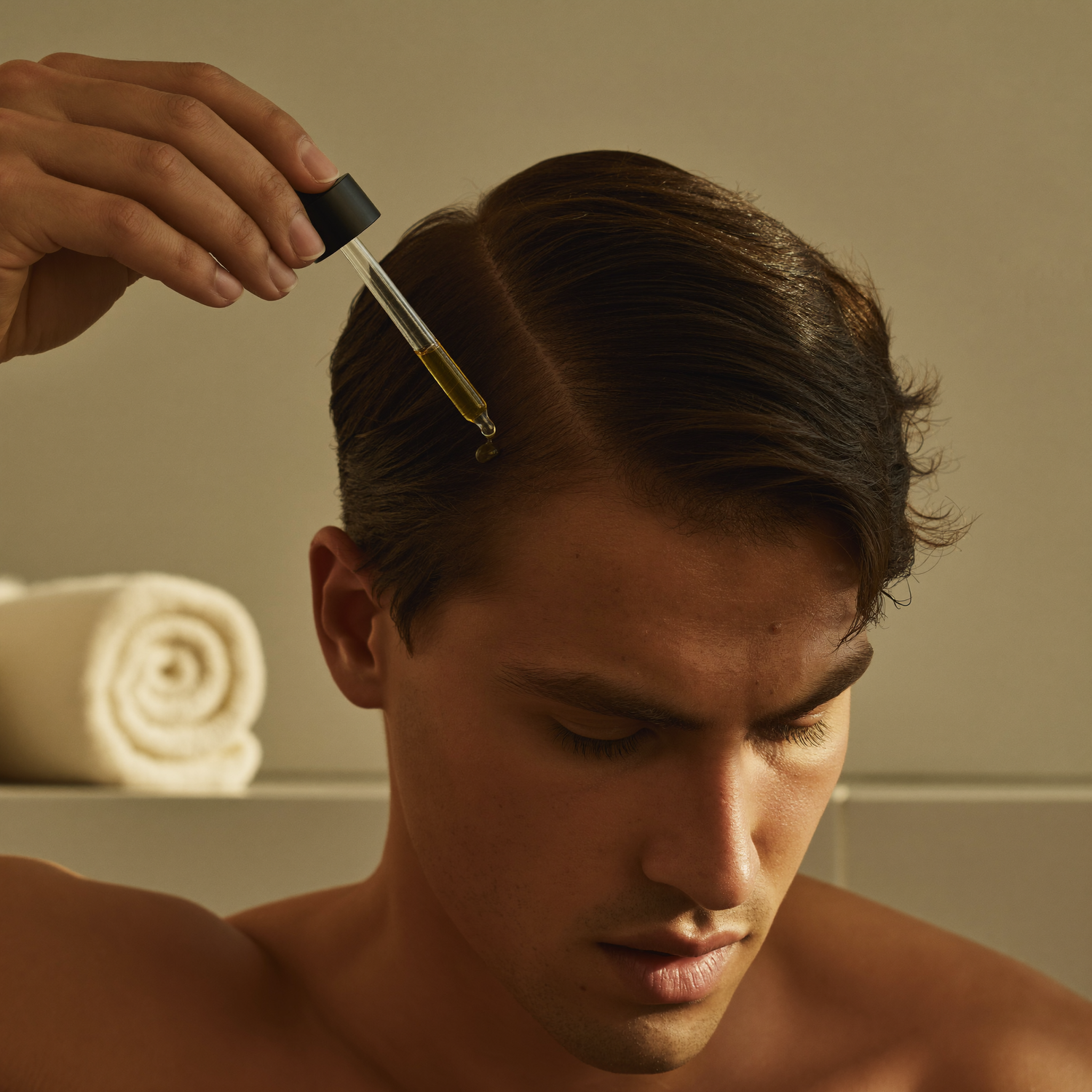
Healthy-looking hair does not begin with a complicated shelf of products. It begins with a scalp care routine that is gentle, consistent and appropriate for your hair type.
The goal is not to chase overnight transformation. It is to keep your scalp clean, reduce avoidable damage and notice meaningful changes early.
1. Wash According to Your Scalp
There is no universal shampoo schedule that works for every man.
If your scalp becomes oily quickly or you exercise and sweat frequently, you may prefer to wash more often. If your hair is dry, curly, coarse or chemically treated, frequent shampooing may make it feel drier and more difficult to manage.
Pay attention to:
-
How quickly your scalp becomes oily
-
Product buildup near the roots
-
Itching or visible flakes
-
How your hair feels after washing
-
Your training, work and styling routine
The American Academy of Dermatology recommends washing based on how dirty or oily your hair becomes rather than following an arbitrary schedule.
2. Apply Shampoo to the Scalp
Shampoo is designed primarily to remove excess oil, dead skin and product buildup from the scalp.
Apply a small amount to wet hair and gently massage it into the scalp with your fingertips. Avoid scratching with your fingernails or aggressively rubbing the entire length of your hair.
When you rinse, allow the shampoo to flow through the rest of the hair. This cleanses without unnecessarily drying the ends.
A clean scalp should feel comfortable—not tight, irritated or stripped.
3. Do Not Skip Conditioner
Conditioner is not only for long hair.
It helps reduce friction, tangling and breakage while making hair easier to manage. Men with fine or straight hair can focus conditioner on the middle and ends. Men with dry, curly or textured hair may need it throughout more of the hair length.
Conditioner belongs on the hair rather than being heavily layered onto an oily scalp unless the product is specifically designed for scalp use.
4. Dry and Style Gently
Wet hair is more vulnerable to stretching and breakage.
After showering, gently press or wrap your hair with a soft towel instead of rubbing it aggressively. If you use a comb, choose a wide-tooth design and work through tangles gradually.
When possible, allow your hair to air-dry partially before using heat. If you regularly use a blow dryer:
-
Select a low or medium heat setting
-
Keep the dryer moving
-
Avoid holding it directly against the scalp
-
Use a heat-protectant product when appropriate
-
Limit unnecessary high-heat styling
Daily damage is rarely dramatic. It usually accumulates through repeated heat, pulling, friction and harsh styling.
5. Add One Consistent Leave-In Step
A leave-in scalp product can become part of a simple daily grooming routine, but more product is not necessarily better.
Follow the label directions and apply the recommended amount to the intended area. Avoid combining several new products at the same time, as this can make it difficult to identify the cause if irritation develops.
A practical approach is:
-
Begin with a clean or freshly refreshed scalp.
-
Apply the product in sections so it reaches the scalp.
-
Massage gently without scratching.
-
Allow it to absorb before applying heavy styling products.
-
Use it consistently according to its instructions.
A cosmetic scalp serum may support the appearance and condition of the hair and scalp, but it should not be treated as a diagnosis or medical treatment for unexplained hair loss.
6. Avoid Common Sources of Damage
Small styling choices can have a meaningful effect over time.
Try to reduce:
-
Hairstyles that pull tightly on the hair
-
Repeated bleaching, relaxing or aggressive chemical treatments
-
Excessive high-heat styling
-
Forceful brushing
-
Scratching or picking at the scalp
-
Heavy product buildup without regular cleansing
When spending extended time outdoors, a hat can also help protect the scalp and hair from direct sun exposure.
7. Support the Routine From the Inside
Hair care products are only one part of the picture.
A balanced diet, adequate protein intake, regular sleep and overall health all matter. However, taking more vitamins does not automatically lead to better hair.
Biotin is frequently promoted for hair, skin and nails, but the National Institutes of Health notes that evidence supporting additional biotin for hair health in otherwise healthy people is limited. High-dose biotin can also interfere with certain laboratory test results.
Do not automatically add high-dose hair supplements because of a social media recommendation. Discuss persistent concerns or suspected deficiencies with a qualified healthcare professional.
8. Know When a Routine Is Not Enough
Scalp care can reduce avoidable damage, but it cannot address every cause of thinning or hair loss.
Consider speaking with a board-certified dermatologist if you notice:
-
Sudden or rapidly increasing shedding
-
Distinct bald or thinning patches
-
Persistent itching, pain, redness or scaling
-
Hair loss following a new medication or illness
-
Progressive thinning that continues despite gentler care
-
Any change that causes concern
Hair loss can have different causes, and an accurate diagnosis is important before choosing a treatment. The same solution will not work for everyone.
Keep the Routine Simple
A sustainable scalp routine does not need to take 30 minutes.
A straightforward system may be enough:
Morning
-
Check how your scalp feels
-
Apply your chosen leave-in product as directed
-
Style with minimal heat and tension
Evening
-
Cleanse when needed
-
Condition the hair
-
Dry gently
-
Observe any irritation or unusual changes
Consistency makes a routine easier to evaluate. Change one element at a time, pay attention to how your scalp responds and avoid expecting immediate transformation.
Build Your Hair Routine
Explore the Helixmane Hair Collection for simple products designed to fit into a consistent daily grooming routine.
Sources and Further Reading
-
American Academy of Dermatology: Hair Care Habits That Can Damage Hair
-
American Academy of Dermatology: Hair Loss Diagnosis and Treatment
This article is for educational purposes only and is not intended to diagnose, treat, cure or prevent any disease. It is not a substitute for professional medical advice. Consult a qualified healthcare professional regarding personal health concerns or before beginning a new supplement or treatment.


Leave a comment
This site is protected by hCaptcha and the hCaptcha Privacy Policy and Terms of Service apply.